Why Change Feels So Hard
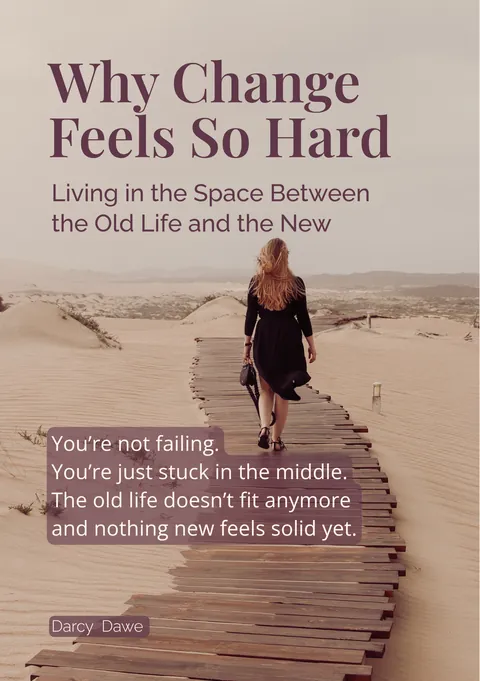
Dear Reader
You may be in a place where the old life no longer fits, but the new one has not fully formed. From the outside, things might look mostly intact. You are still functioning. You are still moving through your days. But internally, something has shifted. What once felt stable now feels uncertain, and the direction that used to carry you forward no longer feels clear.
This can be a confusing stretch. You know something needs to change, yet every step forward feels harder than expected. Progress is uneven. Some days feel hopeful, others flat or heavy. This book is about that middle space. Not the moment of collapse, and not the final rebuilding. The stretch in between, where the old structure has loosened, and the new one has not yet settled. If you find yourself here, questioning, hesitating, trying to move forward while still feeling unsteady, you are not alone.
This book simply names what that season can feel like.
Who I Am
Hello, I'm Darcy. I know the stretch of life where something has loosened, but nothing new has fully formed. From the outside, life may still look intact. Inside, direction can feel uncertain, and progress can feel uneven. This book comes from that middle space, where the old structure no longer holds and the new one has not yet settled.
Chapter 1
Why Wanting Change Isn't Enough
The Place In Between
Wanting things to be different is rarely the problem. The old structure has loosened. The new one hasn't formed. This is the experience these pages stay with.
The Space In Between
The wanting itself can become exhausting. You have turned the situation over, replayed it and considered the same questions again and again. Sometimes there is even a clear idea of what needs to change, at least on paper.
Thoughts about fear. About not trying hard enough. About getting something wrong. Questions about why other people seem to manage while life stays stuck in the same loops, the same days, the same conversations. The old life no longer fits, but the new one hasn't arrived. Instead of being recognised as a real place to stand, this space often gets treated like something you're doing wrong.
Mornings can start without much shape. Time stretches. Direction feels unclear. Sometimes it's just flat and vaguely unreal, and that's the whole day. There can be emptiness without a clear reason. Numbness. A sense of going through the motions. Thoughts like I can't be bothered anymore, followed closely by judgement for thinking them.
Wanting change doesn't help much when there's nowhere solid to put your feet. When an old life loosens or falls away, even one that needed to end, it leaves a gap. At first, that gap can feel like relief. Then discomfort. Then something heavier and quieter.
When nothing solid has formed to replace what's gone, attention naturally reaches for what's familiar. Familiar routines. Previous relationships. Earlier versions of self. That pull shows up, especially on tired days, when familiar feels easier than staying with the unknown. Fear gets louder. Doubt fills the space. Old patterns start to look tempting again. An empty stretch of time can feel unsettling, particularly when there is little else to organise it around.
There's a lot of talk about being brave, starting over, and reinventing yourself. Much less about what it feels like after something has already been left behind, but nothing new has taken shape yet. Days start to feel like you're falling behind without knowing what you missed. It's possible to understand exactly why something needs to change and still feel unable to move. It's possible to want something different and still feel completely worn out.
The Shift
This can be part of the experience when the structure that once organised life goes quiet and nothing new has replaced it yet. In that space, people often go back to what they already know. Some days there simply isn't anything solid yet. Just getting through the day.
Dear Reader
If this feels familiar, the uncertainty itself may be taking up more of the day than anyone else can see. You can want things to change and still have no clear idea of what comes next.
Chapter 2
Days With No Shape
Time loosens. The day has no pull. Hours stretch without edges. Nothing moves forward yet. Everything blurs together. This is what days can feel like when the shape of things gives way.
When Time Loosens
One of the hardest parts of the middle is how the days stop making sense. There's often a strange moment on waking when nothing pulls the day into focus. Not in a dramatic way. In a practical one. The question isn't, What do I want from life? It's, What am I supposed to do with myself today?
When the old structure stops holding things in place, days lose their edges. That structure came from work. From relationship. From being needed. Sometimes it was just routine. Whatever it was, it gave time a shape. It told the day when to begin, where to go, and how to end. Without it, time stretches.
Hours blur. Days drift. It's common to look up and realise it's already afternoon. Or to spend long periods scrolling through the same few apps without really absorbing anything. Or to sit down with the intention to do something and forget what that thing was meant to be.
This is often where judgement creeps in. Thoughts like I'm wasting time or I should be doing more start to surface. Discipline and motivation get blamed. Effort may be only part of it. There may also be less to organise the day around. When little anchors the day, even ordinary tasks can take more deliberate effort. Even small decisions start to feel heavy. There's no rhythm to fall into, no default setting to rely on. So energy drains.
It's possible to do very little and still feel exhausted. Not because nothing is happening, but because every hour has to be navigated without a map. In this space, days can feel flat, empty, or directionless. Tasks get done, but they don't land anywhere. Life continues, but it doesn't quite connect.
That's often when the thought appears: Is this it? Not as a crisis. As background noise. Something that sits underneath the day while tea is made, laundry is folded, or the same room is paced for the third time.
From the outside, life may still look functional. Responsibilities might still be met. But internally, time can feel hollow and uncontained. When the framework that once organised life slips out of place, it leaves space before anything new takes its place. Living inside days with no shape is tiring.
Dear Reader
A day can be difficult to organise when the routines that once shaped it have gone. That is something to notice about your circumstances, rather than turn immediately into a judgement about yourself.
Chapter 3
Everything Feels Flat
Nothing feels sharp. Nothing feels heavy either. Days pass without landing. Moments come and go. Very little leaves a mark. It moves quietly, without drama.
When Nothing Registers
Emptiness shows up. Not sharp grief. Not active sadness. Something quieter. Flatter. As if the volume on life has been turned down and never brought back up. Life continues, but it doesn't register in the same way. Things happen, but they don't land. Conversations pass through without leaving much behind. Even moments that should feel good arrive muted, then fade. Foggy. As if something vital has leaked out.
It can feel like moving through life on autopilot. Tasks get done, but there's no sense of arrival. Food is eaten without tasting much. Time moves on without marking itself. The body keeps going, while the inside feels oddly absent. This flatness can start to feel unsettling. There's often an urge to question it. To wonder what's wrong. To ask why nothing sparks interest anymore. Enjoyment feels distant. Motivation thins out. The thought I can't be bothered appears more often than expected.
That thought often comes with a sharp inner voice. It can show up while doing what needs to be done. Sitting in front of the work. Moving through tasks. Feeling very little about it either way. But this dullness doesn't arrive with explanations. It doesn't clarify. It doesn't resolve. It just sits there. Quiet. Persistent. Hard to describe to anyone who hasn't lived inside it.
Sometimes it feels like emptiness without a clear cause. Other times, like numbness or disconnection. Not dramatically. In an ordinary way that makes everything feel heavier than it should. The absence of feeling can be frightening. There may be no clear event to point to, only the unsettling sense that very little is reaching you.
Flatness doesn't announce itself as a problem. It doesn't demand attention. It doesn't move. It's simply there. And living with that quiet nothingness, day after day, can be harder than most people realise.
Dear Reader
There may be no clear explanation for the flatness yet. A change in circumstances can be part of the picture, but these pages cannot tell you what is causing it or how long it will last. If it persists, worsens or makes everyday life difficult, you can speak with a doctor or mental-health professional about what you are experiencing.
Chapter 4
When Self-Blame Moves In
The space doesn't stay empty. The mind looks for a reason. Questions turn inward. Stillness starts to feel like failure. The attention turns back on itself.
Becoming the Explanation
When there is a lot of empty space, the mind looks for a reason. It doesn't arrive loudly or overtly. It sounds reasonable. Measured. Thoughts begin to circle. Something must be wrong with me. Why can't I get myself together? Other people manage. Why can't I?
With nothing clear to point to, you become the explanation. There's no obvious failure. No single mistake. The thoughts repeat. They feel familiar. Personal. They keep asking what's wrong with you. Second-guessing every pause. Comparing your life to people who look like they're moving. The thoughts take on a specific shape. Not trying hard enough. I'm lazy. Failing at something other people seem to manage without effort.
The idea of being behind settles in. Behind in life. Behind everyone else. Behind an invisible schedule that other people seem to be following. Time starts to feel like evidence. Each quiet day becomes another mark against you. Each pause feels suspicious. Each moment of rest starts to feel undeserved. As if not moving fast enough means something has already gone wrong. The pressure builds quietly. No urgency. Just accumulation.
This way of thinking offers an explanation. If it's you, then at least there's a reason. If it's your fault, then the discomfort makes sense. But living under that weight makes everything harder. Confidence thins. Decisions feel risky. Even imagining something different can feel out of reach.
The mind keeps returning to the same conclusions. The same comparisons. The same quiet accusations. Externally, nothing looks obviously wrong. Life may still appear functional. Managed. Inside, the pressure is constant. Unspoken. Relentless.
Dear Reader
When there is no clear explanation for a difficult stretch, self-blame can begin to sound convincing. But feeling behind does not, by itself, tell you why things are hard. The changes in your circumstances belong in that picture too.
Chapter 5
Exhaustion From Trying
Trying takes effort. Trying again takes more. Nothing seems to stick. Energy starts to run out. Even starting feels heavy.
When Effort Stops Working
Rest may not seem to touch this tiredness. You may associate it with trying to make something change and watching it stay the same, gathering energy and using it without seeing a result. Being tired of trying. It can feel like a quiet depletion. The kind that makes the idea of trying again feel heavier than staying still.
It often follows long stretches of effort. Trying to think differently. Trying to motivate yourself. Trying to fix what feels off. Trying to be patient. Trying to make the best of it. Each attempt uses something up. Over time, the effort starts to feel risky. Not because it's hard, but because it hasn't paid off before. Hope feels weaker. Energy becomes limited. The question shifts from What should I do? to Can I afford to try again?
This is where weariness settles into the body. Getting started feels heavy. Decisions get delayed. Even small tasks can feel like too much. Even when the task itself is familiar, you may feel you have little left to bring to it. Worn out. Drained. Done.
You may still want things to change while feeling unable to make another attempt right now. What makes this exhaustion particularly isolating is how little it announces itself. There's no visible crisis. No clear breakdown. Life may still move along at a basic level. But inside, there's a sense of having run out of something essential.
Trying without traction wears people down. And living in that state, where effort feels costly and rest doesn't restore much, can make the middle feel even harder to stay inside.
Dear Reader
The effort may have been real even when the result is hard to see. That does not explain every kind of exhaustion, but it leaves room to recognise what you have been carrying. You do not have to turn being tired into another accusation against yourself.
Chapter 6
Why We Go Back
The familiar still has weight. It feels solid when nothing else does. Uncertainty quiets for a moment. The day makes more sense again. The vacuum pulls you backward.
The Pull of the Familiar
When nothing new has taken shape yet, the pull of what's known can grow strong. Because it already exists. In the middle, what's familiar carries weight in a way nothing else does. Established patterns. Past attachments. Roles once lived inside. Ways of being that already have history and form. They feel solid. They have shape. They come with memory.
Going back can feel like relief. For a moment, there's something to hold onto. Something predictable. Something that quiets the uncertainty, even briefly. The emptiness shrinks. The fog thins. The day makes a little more sense. Returning to the same relationship after deciding not to. Reopening a door that was meant to stay closed. Slipping into patterns that were supposed to be finished. Falling back into familiar habits simply because they fill the time.
There's often shame attached to this. Questions about strength. About resolve. About why the same things keep repeating. Why leaving didn't stick. Why the past keeps pulling harder than the future. In the absence of something new, the familiar becomes a refuge. Even if it hurts. Even if it limits. Even if it keeps life small. At least it's recognisable.
The middle is full of uncertainty. And uncertainty is hard to live with for long stretches. The mind looks for something that reduces it, even temporarily. So it reaches backwards. Forward isn't impossible. It's just not visible yet. It means the space between lives can feel unsafe enough that familiarity becomes comforting, even when it's costly. Going back can offer something recognisable during an uncertain stretch, even when returning carries a cost.
Dear Reader
If you have gone back, it may be worth noticing what felt familiar about returning and what happened afterwards. Uncertainty may have been part of it. There may have been other reasons too. The return alone does not explain the whole experience.
Chapter 7
Not Knowing Who You Are Now
The old answers don't fit. The new ones aren't here yet. Who you were feels distant. Who you're becoming isn't clear. Being between selves can feel like this.
The Gap Between Versions
There's a quiet disorientation that comes from no longer recognising yourself. It doesn't arrive as a crisis. It's more like standing inside your own life and feeling unsure how it fits together. For a long time, identity came from ways of being. From being someone's partner. Someone's support. Someone who was needed. From work, routines, responsibilities, expectations. Those things answered the question without it ever needing to be asked.
When they fall away, the question appears. Who am I now? Often, there isn't an answer. This period can feel undefined. Unclear. As if the edges of the self have softened or loosened. The old version no longer fits, but there's nothing new to step into yet.
Introductions become awkward. Decisions feel heavier. Even simple preferences lose certainty. What once came naturally now requires thought, and sometimes the thought leads nowhere. There can be a sense of existing in a gap. Not who you were. Not who you expected to become. Just here. This is often where comparison slips back in. Watching other people who seem settled in themselves. Moving forward with lives that look anchored and intact. The contrast can make this lack of definition feel like something is wrong.
It can start to feel uncomfortably close. This often happens when identity has been tied to structures that no longer exist. When those structures disappear, a familiar way of describing yourself may no longer fit, while a new one is still difficult to name. That pause can feel deeply destabilising. Not being able to describe yourself. Not knowing what to reach for. There's a temptation to rush past this. To grab a label. A role. A plan. Anything that restores a sense of definition.
Sometimes, there is simply a stretch of uncertainty. Living without a clear sense of who you are, while life continues to ask things of you, can feel profoundly unsettling. It's the experience of living between identities, before a new one has had time to take form.
Dear Reader
Not knowing how to describe yourself now can be unsettling. The roles that once made the answer easy may have changed. There may still be interests, preferences and relationships that matter, even while the larger question remains open.
Chapter 8
Fear and Doubt in the Quiet
The quiet doesn't stay quiet. Questions start to repeat. What if this was a mistake? What if nothing changes? What if I don't get it back? Fear fills the silence.
When the Quiet Gets Loud
When there's very little noise around, other things get louder. Fear often shows up here. Not as panic. As a low, steady tension that runs underneath the day. It hums. It sounds like questions without answers. What if this never changes? What if I've made the wrong call? What if I've left something I won't get back?
They don't demand resolution. They repeat. In the quiet, they have room to stretch. There's nothing obvious to interrupt them. No structure pulling attention forward. No clear next step to lean into. So the mind fills the silence on its own.
Nights are often the hardest. Lying awake, replaying old conversations. Running alternate versions of the past. Imagining futures that feel either unreachable or fragile. The quiet gives these thoughts space to loop. For many, it feels like lying there while the same questions circle without landing anywhere.
Not knowing what comes next doesn't just feel uncomfortable. It starts to feel unstable. Without clarity, the mind begins to reach for worst-case outcomes. Fear fills the gaps where certainty once sat. Doubt starts touching everything. Past choices. Present direction. Future possibility. Even moments of calm can feel temporary, as if they might disappear without warning. You may notice how little seems settled right now.
Such questions can become more noticeable when certainty, structure and direction feel less available. They fill the silence because silence is hard to stay inside.
Some days, these thoughts fade into the background. Other days, they take up most of the space. Either way, they become part of what this in-between can hold. Fear doesn't arrive announcing danger. Doubt doesn't arrive naming itself. They arrive as questions. They settle in as noise. And living alongside that quiet noise, without answers or reassurance, can be one of the hardest places to stay.
Dear Reader
Fear and doubt can become louder in a quiet room. Their presence does not tell you, on its own, how the future will unfold. For now, there may be questions you cannot answer and parts of the day you are still learning how to live with.
Chapter 9
Still Here
No Conclusion
Nothing has resolved yet. Nothing has collapsed either. The days keep arriving. Some feel heavier than others. Most remain unfinished. Staying looks like this. There isn't a conclusion to draw from this. No lesson to extract. No next step to take. No insight that suddenly makes everything clearer. This is simply where things are. The middle doesn't resolve itself neatly. It doesn't announce when it's over. It doesn't offer proof that staying was worth it. It just continues, quietly, alongside ordinary days.
Some days feel heavier than others. Some days feel almost manageable. Some days feel empty again, even after moments of connection or clarity. There's often a pull to rush past this part. To turn it into something productive. To make it mean something more than it does. Not everything makes sense yet. Sometimes, all that's here is staying. Staying with the not knowing, the flatness, and days that don't yet have a shape. Being here while things are still unfinished.
And if all that's happening right now is that you're still here, still reading, still breathing your way through another ordinary day in the middle, that is enough. For now, this is what the moment looks like.
Dear Reader
Staying is not nothing. In the middle, remaining present, continuing to move through the day, is a form of doing something. It may not look like progress. It is still part of what the day has required of you.
Before You Close This Book
This middle stretch may contain things that have gone wrong, as well as things that remain uncertain. Living through it has its own weight and texture. What this book has tried to do is name what that place can feel like, without asking you to resolve it, fix it, or move through it faster than you're able.
The in-between is not a failure state. It is what happens in the gap between one life and the next. It takes time. It is often uncomfortable. And it is something many people live through without having the words for it. You now have some of those words. That is enough for now.